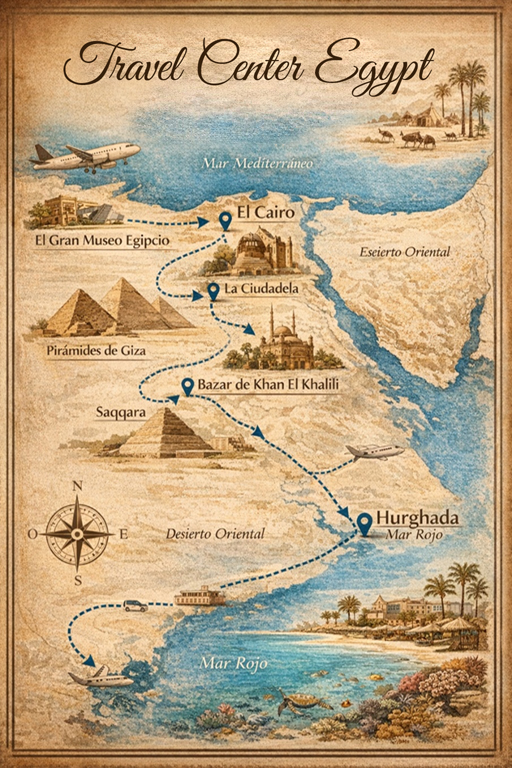
At Travel Center, we present a meticulously crafted itinerary designed to reveal Egypt in all its grandeur—blending millennia of history, exclusive cultural experiences, and exceptional service standards. Throughout your journey, you will explore Cairo at its most captivating, from the legendary Giza Plateau to world-renowned museums and historic districts that narrate the evolution of one of the oldest civilizations on earth. The program is enriched with authentic experiences and carefully curated optional excursions, offering an even more exclusive perspective of the city. The experience continues with a few days in the wonderful Red Sea in Hurghada, where you can enjoy beautiful beaches, relaxation, and unique experiences. The program is complemented by authentic moments and carefully selected optional excursions, allowing you to discover the country from an even more exclusive perspective. Each stage of the journey has been thoughtfully designed to ensure comfort, seamless execution, and personalized service, delivering an unforgettable experience at the crossroads of ancient and modern Egypt.
Every stage of the journey has been thoughtfully crafted to ensure seamless comfort, effortless flow, and highly personalized service, delivering an unforgettable experience at the heart of both ancient and contemporary Egypt.
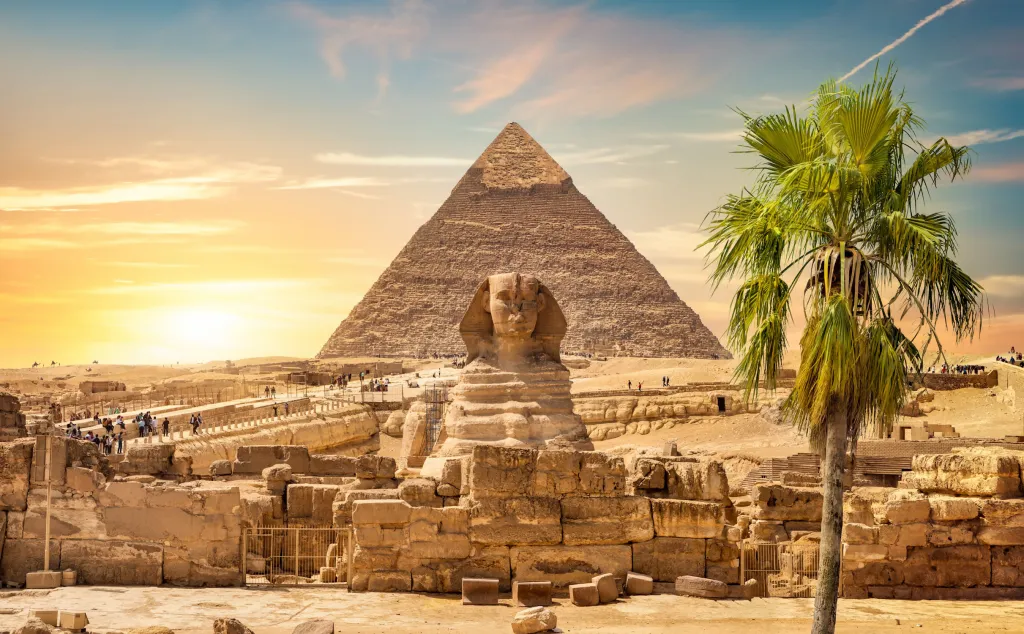
“The Great Pyramid of Kheops, one of the Seven Wonders of the Ancient World, stands as the central monument of the Giza Plateau. Originally, it reached an estimated height of approximately 146 meters, although today it measures around 137 meters due to the loss of its outer casing and part of its apex over the centuries.
It is believed that its original polished white limestone cladding gave the pyramid a smooth, luminous finish, making it visible from great distances. Over time, this outer layer disappeared, likely due to stone removal, looting, and the impact of successive historical periods, when its entrance had not yet been clearly identified.
Notably, the pyramid remained the tallest man-made structure in the world for more than 3,800 years, until around 1311 AD, and continues to stand as one of humanity’s greatest architectural achievements.
Today, a visit to the Giza Plateau allows guests to admire its four main highlights: the Pyramid of Kheops, the Pyramid of Khafre, the Pyramid of Menkaure, and the Great Sphinx.”
During ancient landscaping works on the Giza Plateau—when efforts were made to level the terrain and connect it to the Nile via a landing dock—the bedrock was uncovered. Taking advantage of this natural formation, craftsmen of the 4th Dynasty are believed to have carved the Sphinx directly from the living rock, giving it its distinctive shape.
According to various theories, the face of the Sphinx represents Pharaoh Khafre, combining symbolic, religious, and architectural power into one of the most iconic images of Ancient Egypt.
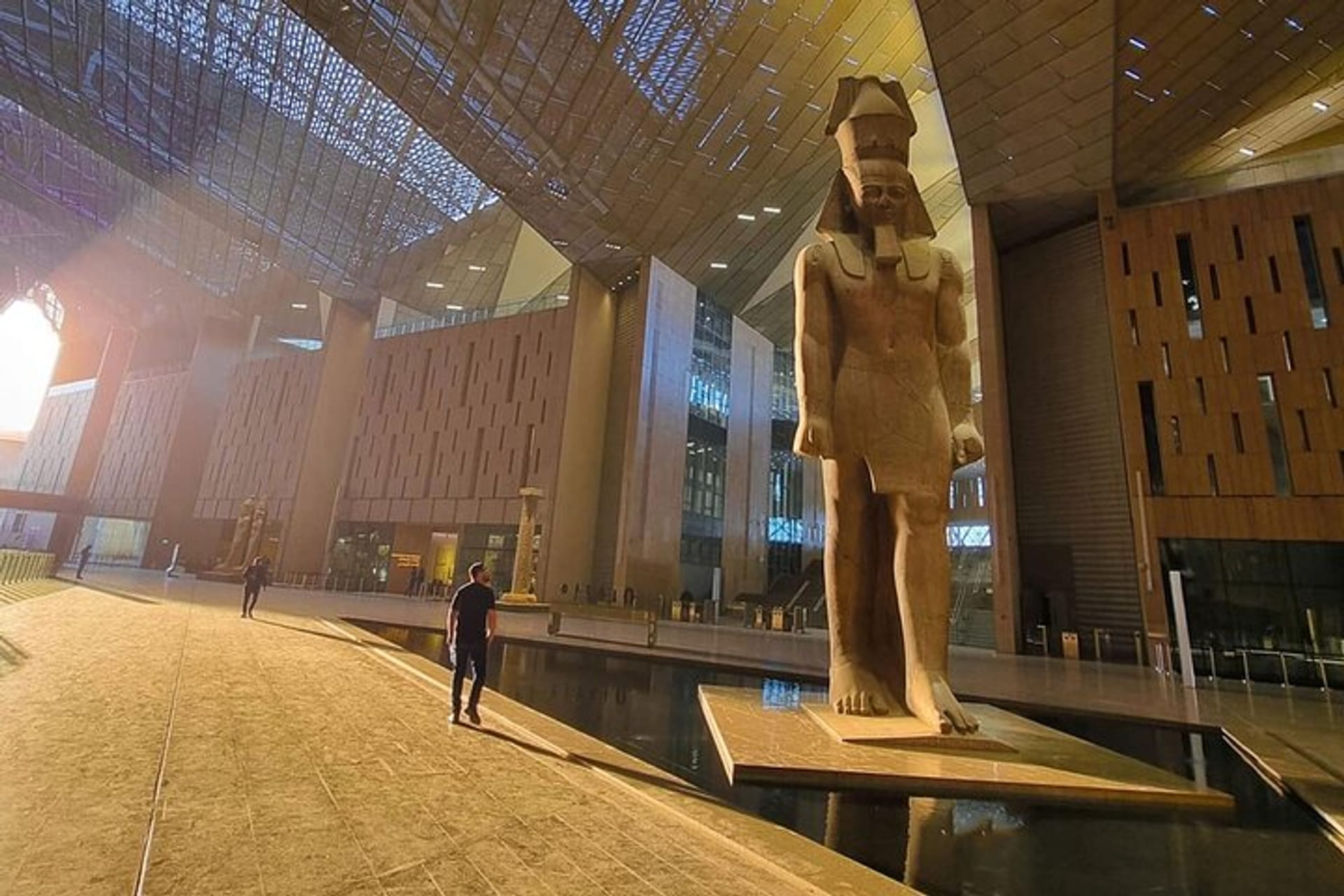
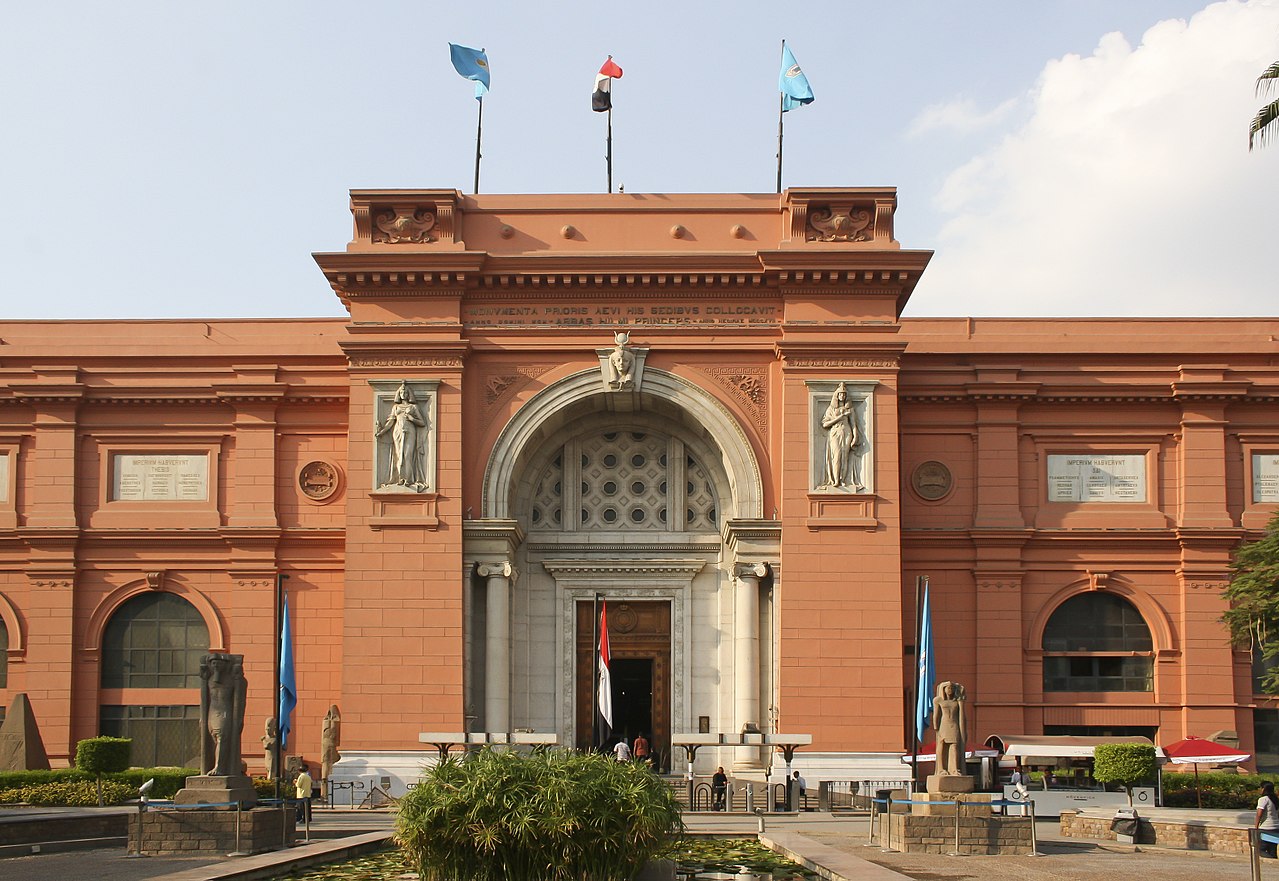
The Grand Egyptian Museum in Cairo (GEM), widely regarded as the most anticipated museum opening globally, has recently inaugurated its first phase after decades of planning and development, opening its initial 12 chronological galleries. These spaces showcase key pieces that narrate the history of one of the most fascinating civilizations of antiquity, spanning the Old Kingdom, Middle Kingdom, New Kingdom, and even the Greco-Roman period.
This initial opening, after more than 20 years of development and a major investment, represents a historic milestone, establishing the GEM as the new home of Tutankhamun’s treasures and positioning it among the most important museums in the world.
Often referred to as “the fourth pyramid” due to its scale and significance, the museum goes far beyond a traditional exhibition space, housing more than 100,000 artifacts and offering an immersive cultural experience. Its galleries feature cutting-edge multimedia presentations and virtual reality experiences that create a unique connection between past and present, showcasing Egypt’s archaeological and cultural richness in an innovative way.
Access to the museum is through a vast plaza designed to evoke the feeling of standing before the Pyramids of Giza. Inside, visitors are greeted by the imposing statue of Ramses II, over 10 metres high, located in the main atrium. From the grand staircase, guests ascend to a viewing platform with a glass façade offering spectacular views of the exterior and surrounding historical wonders, reinforcing the museum’s deep connection with its iconic landscape.
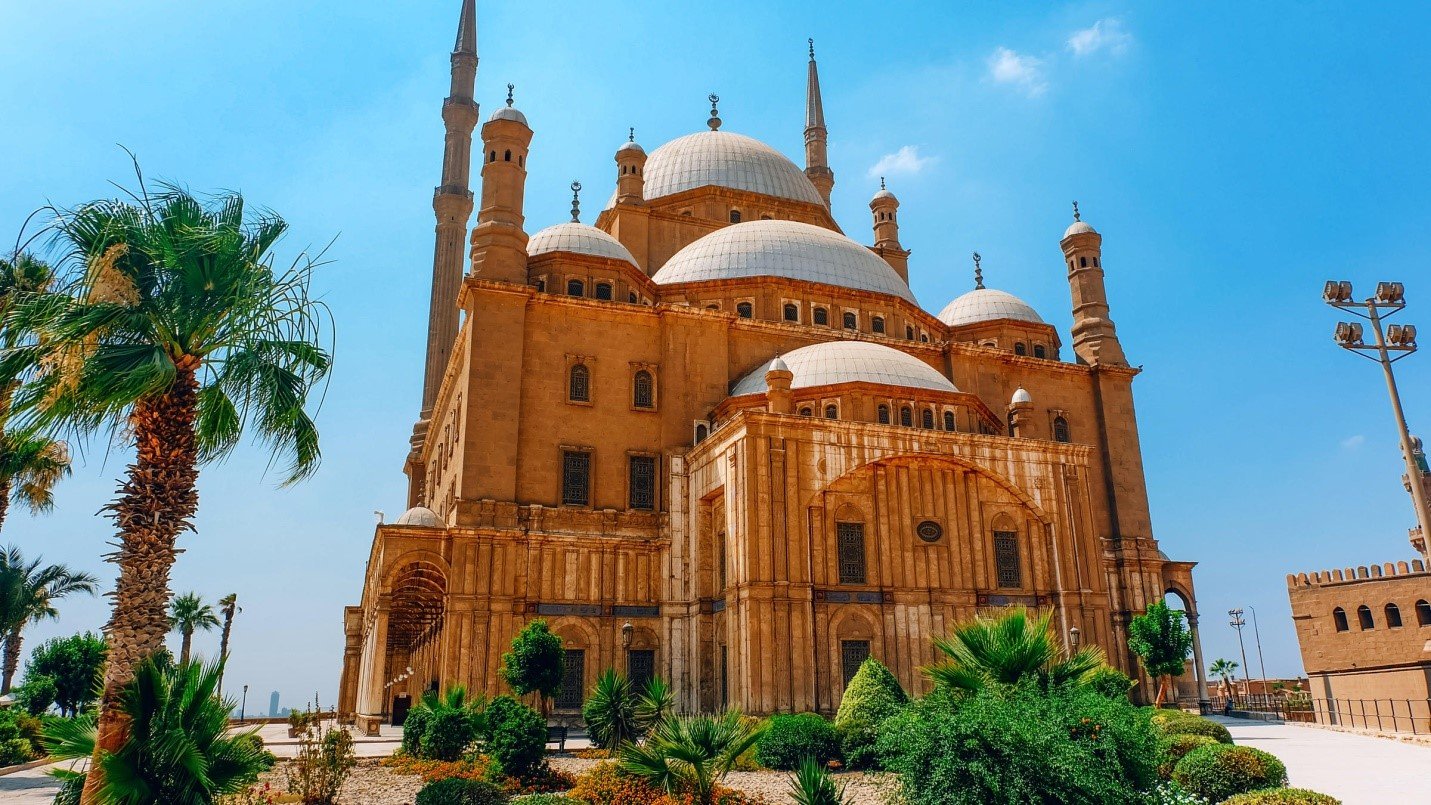
Built in 1176 by Saladin as a defense against the Crusaders, it became one of the most important military strongholds in Cairo.
In 1805, Muhammad Ali took control of Egypt with the support of the Mamluks, former soldiers and mercenary officers who had held significant influence over the country’s power structure. During his rule, Muhammad Ali transformed the Citadel, building within its walls his royal residence known as the Palace of the Jewels, as well as the Mint, a prison, and his architectural masterpiece: the Mosque of Muhammad Ali, considered the crown jewel of more than 500 mosques in Islamic Cairo, distinguished by its Ottoman style and commanding presence over the city.
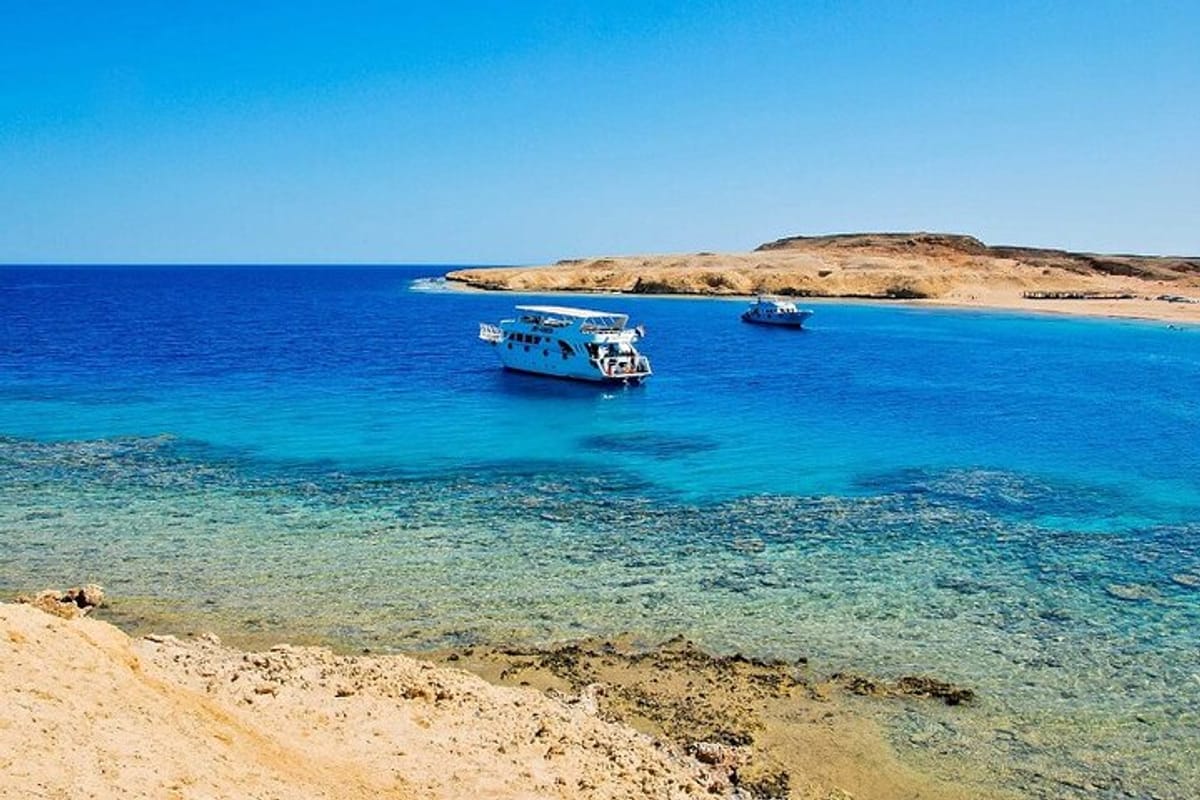
Hurghada is an ideal destination for families, as it combines relaxation with a wide range of activities for all ages. Among the most popular options are snorkeling in shallow waters, glass-bottom boat excursions to observe coral reefs and tropical fish, submarine or semi-submarine rides, and water activities such as kayaking or paddle surfing in safe, calm areas.
It is also possible to enjoy desert excursions by quad or 4×4 vehicle, visit Bedouin villages, and experience unforgettable sunsets in a unique natural setting. For those seeking relaxation, the resorts offer large swimming pools, children’s areas, entertainment programs, and direct beach access.
Possible excursions from Hurghada
Possible excursions from Cairo