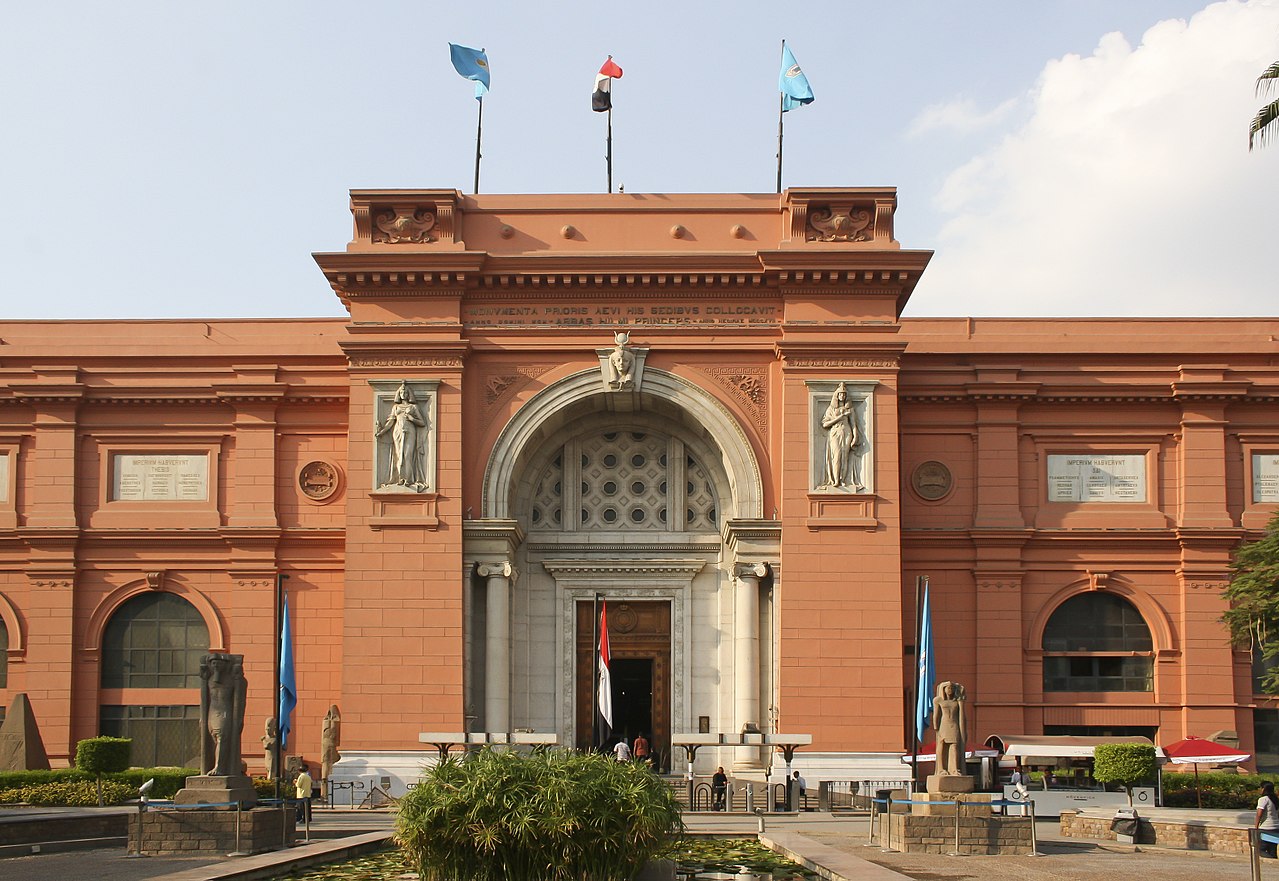
This journey, designed by Travel Center, invites you to discover Egypt from a conscious luxury perspective, where exclusivity, comfort and the depth of experience come together in one single itinerary. Beyond its historical value, the destination reveals itself as a living space where architecture, landscape and symbolism engage with personal perception and experience.
Throughout the itinerary, from Cairo to the private navigation of the Nile on a luxury dahabiya, each stage has been designed to combine cultural exploration, well-being and moments of pause, creating a natural balance between outward discovery and inner connection.
True to our vision of luxury as time, attention and authenticity, we have designed an experience refined in every detail, with exclusive services, privileged access and sensory proposals that invite you to experience Egypt in an intimate, profound and memorable way.
Each stage of the journey has been thoughtfully planned to ensure comfort, seamless flow and personalized service, offering an unforgettable experience in the heart of ancient and contemporary Egypt.
✶Sacred geometry of the Giza Plateau
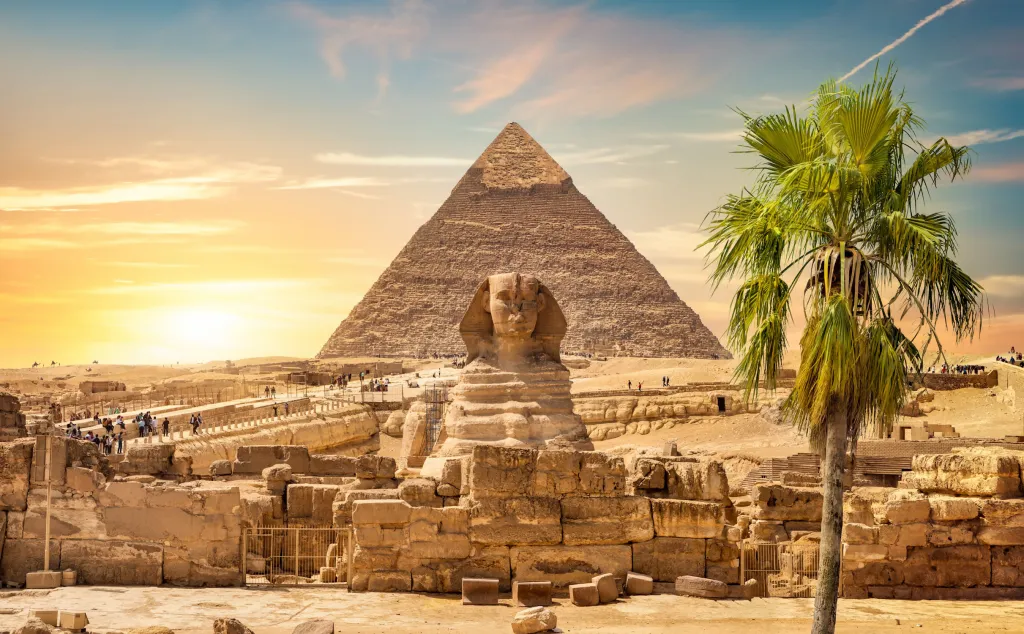
The Giza environment has been considered, from various traditions and fields of study, as a singular space where architecture and landscape seem to respond to principles of harmony, proportion and orientation that go beyond the merely constructive. The arrangement of the pyramids, their relationship with the cardinal points and their integration with the desert horizon have given rise to interpretations linked to the so-called sacred geometry, understood as the pursuit of balance between form, energy and meaning.In this context, the Giza plateau can be experienced not only as a monumental complex, but as an environment that invites contemplation and introspection. The relationship between the earth, the open sky and the scale of the structures generates a sense of breadth and silence that is hard to find anywhere else, fostering states of calm, awareness and presence.
✶The origin of the Sphinx
During the preparation works on the Giza plateau, when the aim was to level the ground to connect it with the Nile via a landing dock, the bedrock was discovered. Taking advantage of this natural formation, the sculptors of the 4th Dynasty carved the Sphinx directly from the living rock. According to various theories, its face would represent the pharaoh Khafre, integrating symbolic, religious and architectural power.
Dining recommendations: Khufu Restaurant or Marriott Mena House
Dining recommendations: Crimson Bar & Grill, Pier 88, Abou el-Sid
✶Ka and Ba — The duality of the Egyptian soul
The scenes depicted in the tombs have a clearly funerary character and are designed to accompany the deceased on their journey. The Ka represents the vital force that remains bound to the body after death and needed to be nourished, hence the presence of offerings. The Ba was understood as the individual personality or essence, a spirit capable of moving between the world of the living and the dead. The heart was considered the center of thought and the soul, which is why during mummification it was left in the body to ensure its spiritual integrity in the afterlife.
✶The body as an integral system
This temple allows us to explore how ancient civilizations developed an integrated understanding of the body as a physical and energetic system, introducing the relationship between:
▸ Medical observation and empirical knowledge
▸ The rituality of care and healing
▸ Integration between the physical body and spiritual energy
✶The feat of the 20th century
In 1968, the complex was dismantled and relocated onto an artificial hill to prevent it from being flooded following the construction of the Aswan Dam, in one of the greatest feats of archaeological engineering of the 20th century. Abu Simbel is conceived as a monumental expression of the bond between humanity and divinity, where the figure of the pharaoh acts as a mediator between the earthly and the sacred. Carved from rock, the temple symbolizes permanence through matter, turning stone into a vehicle of eternity and memory.
✶Mohamed Ali and the transformation of the Citadel
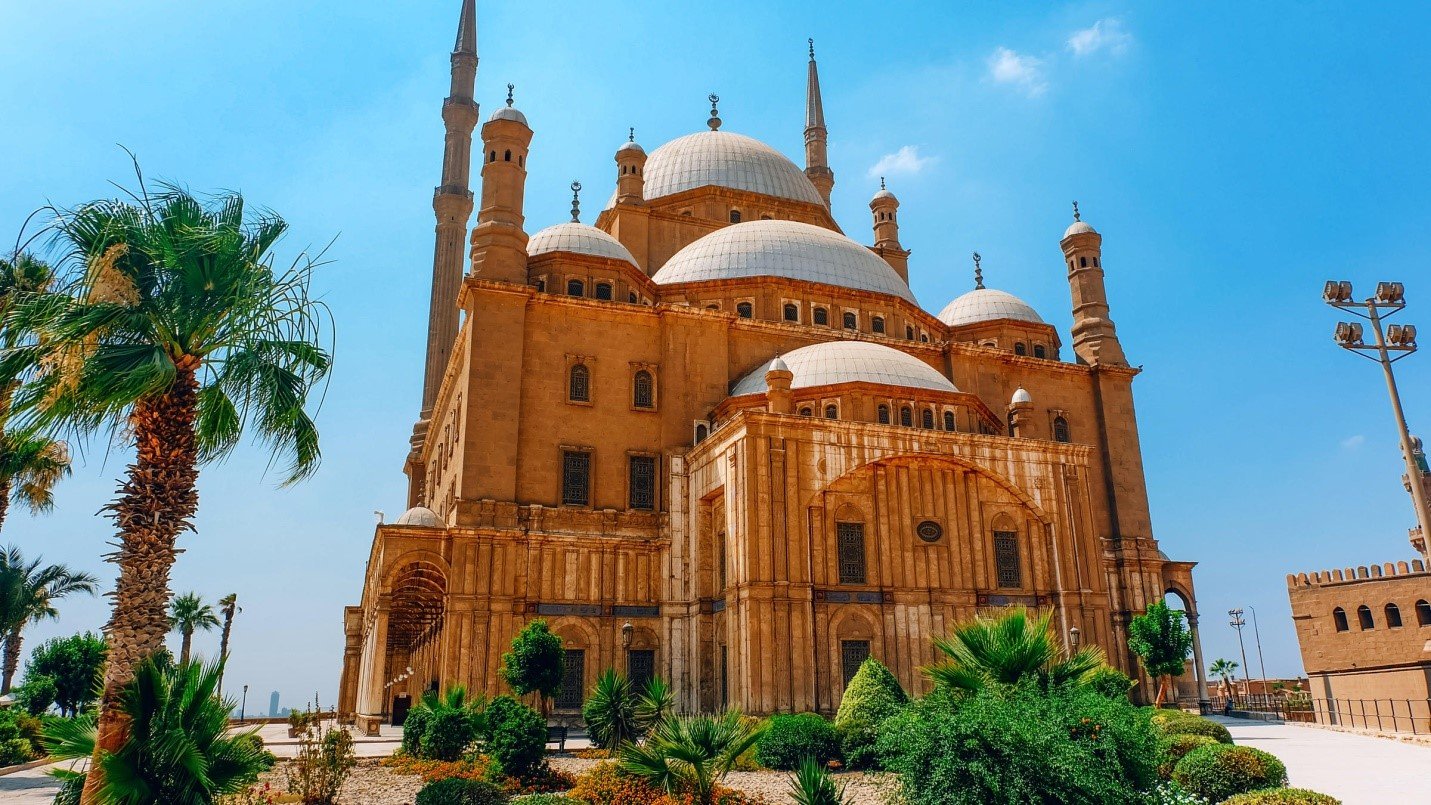
In 1805, Mohamed Ali took control of Egypt and transformed the Citadel, constructing within it the Jewel Palace, the Mint and his great masterpiece: the Mosque of Mohamed Ali, considered the crown jewel among the more than 500 mosques of Islamic Cairo, renowned for its Ottoman style and imposing presence over the city.
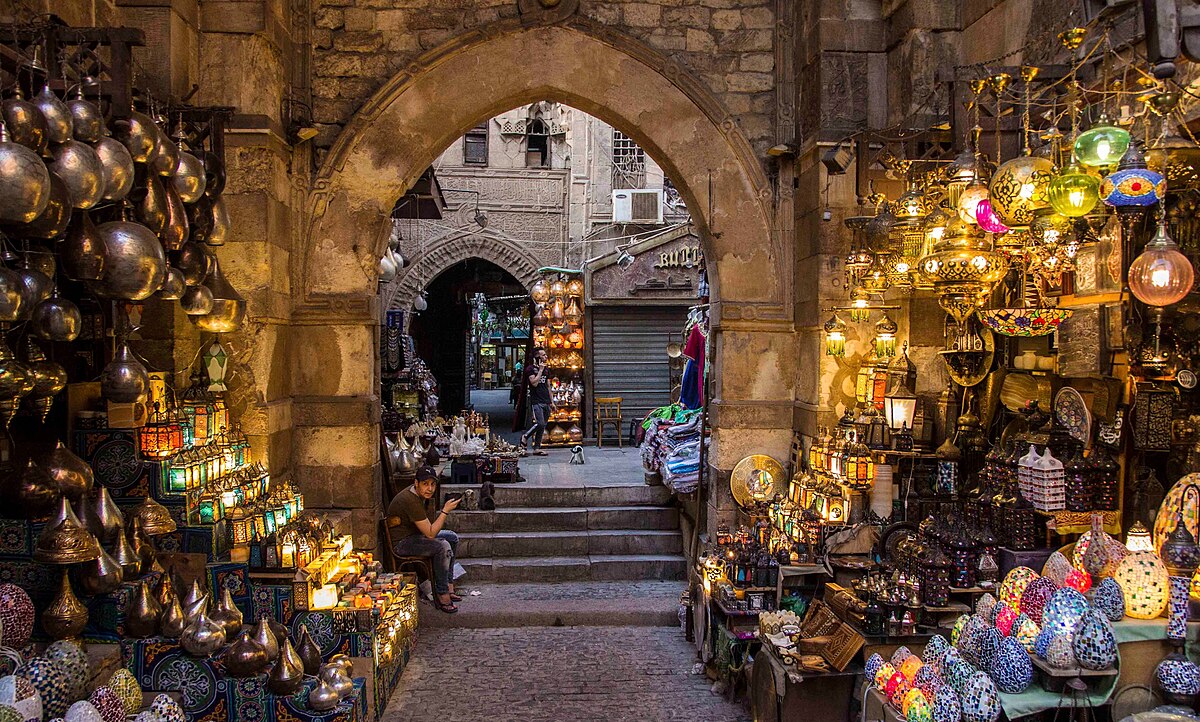
Dining recommendations: Khan El Khalili Restaurant & Naguib Mahfouz Café
“Every journey we design does not end at the airport. It ends in the heart of the traveler.”
ACCOMMODATION
INCLUDED VISITS
EXCLUSIVE SERVICES
Possible excursions from Cairo:
Possible excursions from the Dahabiya: