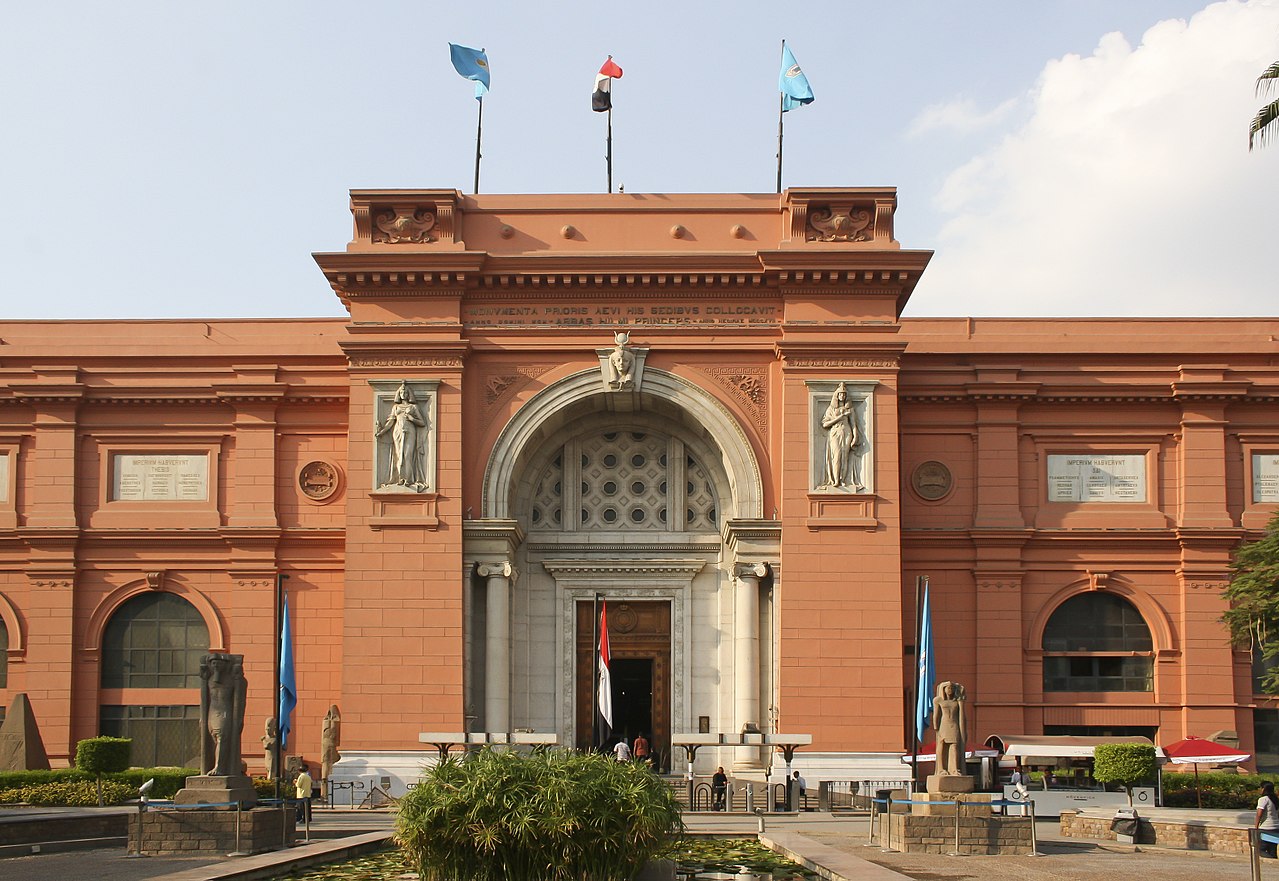
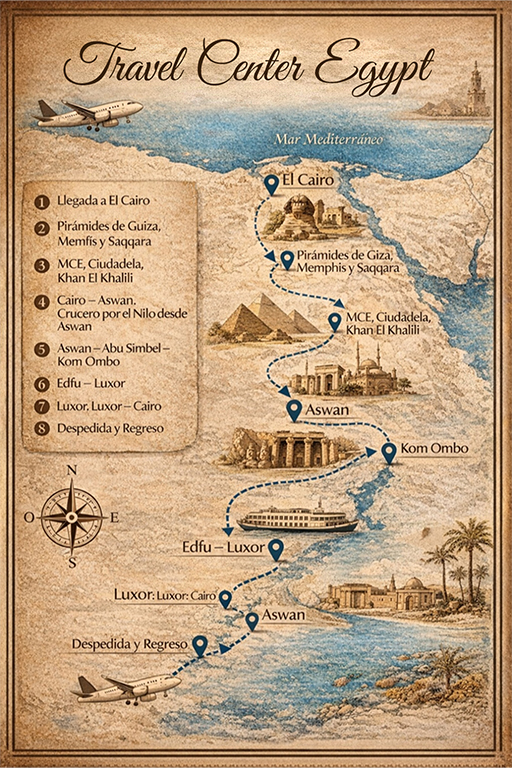
At Travel Center, we present a meticulously designed journey to discover Egypt in all its grandeur, blending ancient history, exclusive cultural encounters, and elevated, high-end service. Throughout this experience, you will explore Cairo at its most captivating, from the iconic Pyramids of Giza and world-renowned museums to historic districts that tell the story of one of the world’s oldest civilizations. The journey then continues with a profound immersion into the pharaonic legacy, visiting extraordinary temples, archaeological treasures, and unique cultural sites during the Nile cruise. The program is further enriched with authentic moments and carefully curated optional excursions, offering a more exclusive and privileged perspective of the destination.
Every stage of the journey has been thoughtfully crafted to ensure seamless comfort, effortless flow, and highly personalized service, delivering an unforgettable experience at the heart of both ancient and contemporary Egypt.
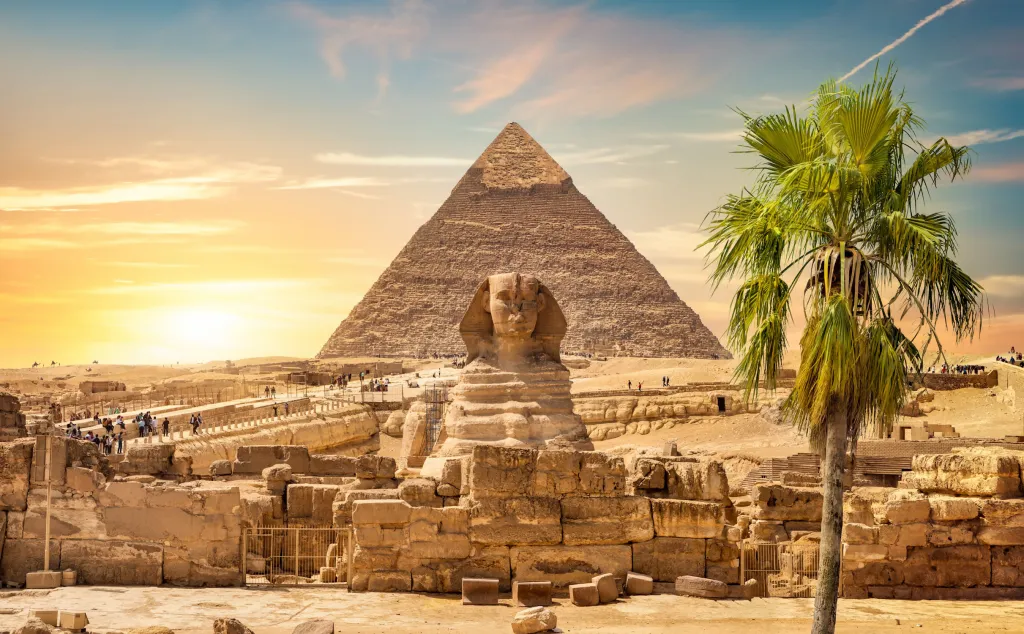
“The Great Pyramid of Kheops, one of the Seven Wonders of the Ancient World, stands as the central monument of the Giza Plateau. Originally, it reached an estimated height of approximately 146 meters, although today it measures around 137 meters due to the loss of its outer casing and part of its apex over the centuries.
It is believed that its original polished white limestone cladding gave the pyramid a smooth, luminous finish, making it visible from great distances. Over time, this outer layer disappeared, likely due to stone removal, looting, and the impact of successive historical periods, when its entrance had not yet been clearly identified.
Notably, the pyramid remained the tallest man-made structure in the world for more than 3,800 years, until around 1311 AD, and continues to stand as one of humanity’s greatest architectural achievements.
Today, a visit to the Giza Plateau allows guests to admire its four main highlights: the Pyramid of Kheops, the Pyramid of Khafre, the Pyramid of Menkaure, and the Great Sphinx.”
During ancient landscaping works on the Giza Plateau—when efforts were made to level the terrain and connect it to the Nile via a landing dock—the bedrock was uncovered. Taking advantage of this natural formation, craftsmen of the 4th Dynasty are believed to have carved the Sphinx directly from the living rock, giving it its distinctive shape.
According to various theories, the face of the Sphinx represents Pharaoh Khafre, combining symbolic, religious, and architectural power into one of the most iconic images of Ancient Egypt.
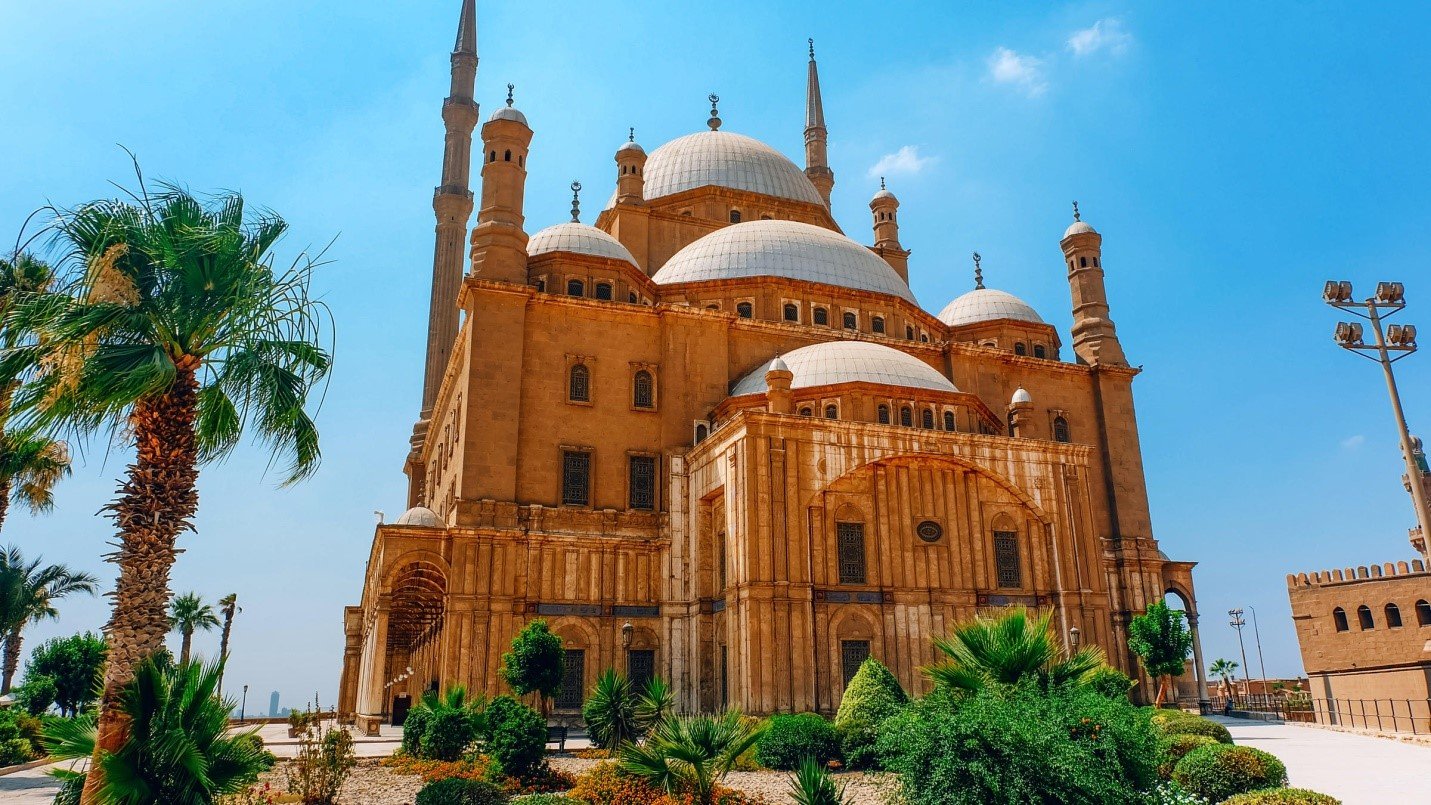
Built in 1176 by Saladin as a defense against the Crusaders, it became one of the most important military strongholds in Cairo.
In 1805, Muhammad Ali took control of Egypt with the support of the Mamluks, former soldiers and mercenary officers who had held significant influence over the country’s power structure. During his rule, Muhammad Ali transformed the Citadel, building within its walls his royal residence known as the Palace of the Jewels, as well as the Mint, a prison, and his architectural masterpiece: the Mosque of Muhammad Ali, considered the crown jewel of more than 500 mosques in Islamic Cairo, distinguished by its Ottoman style and commanding presence over the city.
Visit to the majestic rock-cut temples commissioned by Pharaoh Ramses II and dedicated to himself and his wife Nefertari. This extraordinary complex was designed to commemorate the victory at the Battle of Kadesh and to reaffirm the pharaoh’s power over the Nubian peoples.
One of the most remarkable aspects of the site is its complete relocation in 1968, when it was dismantled and rebuilt on an artificial hill to prevent its submersion following the construction of the Aswan High Dam, in one of the greatest achievements of 20th-century archaeological engineering.
Built during the reign of Ptolemy VI Philometor between 180 and 145 BC, the temple features a rare double and perfectly symmetrical design along its central axis, with two entrances and two independent hypostyle halls, making it unique within Egyptian architecture. Later expansions by Ptolemy VIII and Ptolemy XII further enhanced its historical significance. It is also considered the only temple associated with both white and black magic, and is believed to have housed a fertility clinic, as well as areas dedicated to gynecology, obstetrics, and a pharmacy.
The scenes depicted inside the tombs are of a distinctly funerary nature, designed to accompany the deceased on their journey into the afterlife. Every detail of their decoration and structure was conceived to protect and preserve the embalmed body, understood as the essential vessel for the continuity of existence.
According to Ancient Egyptian beliefs, the human being was composed, among other elements, of the Ka and the Ba. The Ka represented the life force or spiritual energy, a vital essence that remained connected to the body after death and required nourishment, hence the presence of offerings such as food and drink, some of which have even been found preserved in desiccated form within tombs. The Ba, on the other hand, represented the individual personality or essence of the deceased, a free and mysterious spirit capable of moving between the world of the living and the realm of the dead. In Egyptian religious thought, the heart was considered the center of thought and soul, which is why during the mummification process all internal organs were removed except the heart, which remained in the body to ensure spiritual integrity in the afterlife.
Within this extraordinary site, several tombs can be visited, adorned with remarkable reliefs and paintings that have survived for millennia, offering a unique insight into the beliefs and funerary rituals of Ancient Egypt. An optional visit to the famous tomb of Tutankhamun is also available, one of the most iconic and fascinating tombs in the entire Valley of the Kings.
Possible excursions from Cairo
Possible optional excursions from the Nile cruise